
You’re halfway through a job when the phone rings. You can’t answer, but you don’t know whether it’s a new customer or someone chasing an existing booking.
An owner described that problem in a small-business discussion on Reddit. They couldn’t justify a full-time receptionist and wanted calls answered while they worked.
Before buying an AI receptionist, decide what it’s allowed to say on your behalf.
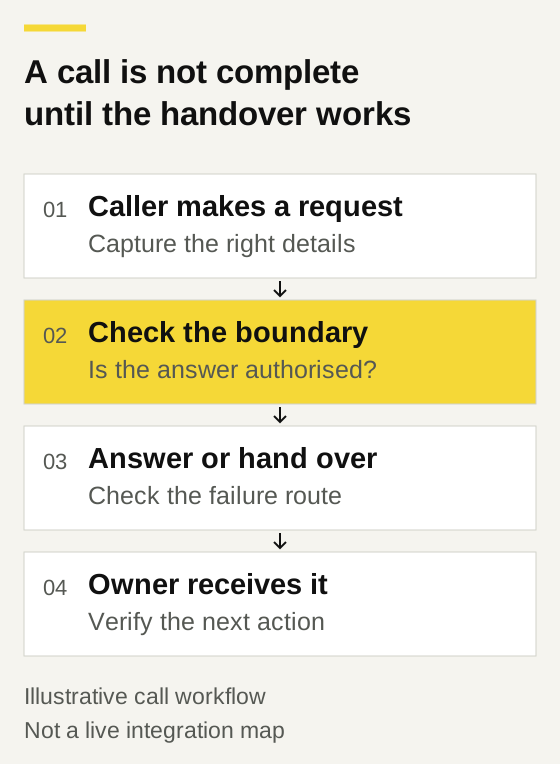
Decide what the call can commit you to
Write down where an enquiry becomes a promise.
Taking a preferred date can be useful. Confirming that date requires reliable availability and permission to book. A caller asking for a price needs an approved answer or a person who can quote the work.
For a business that quotes each job, the call might end with a request for someone to ring back. That’s a complete outcome if the caller understands that nothing has been booked and the request reaches the right person.
If you’re assessing an AI receptionist for a small business, settle those boundaries before choosing its voice.
Try calls that don’t follow the script
Use your own ordinary enquiries, with identifying details removed. Then try a complication like these hypothetical calls:
Change the address halfway through. Check which address ends up in the summary.
Ask for a price the system hasn’t been given. Does it admit that someone needs to check?
Ask to move an existing booking. Does it have the access and authority to do that, or does it create a request?
Ask for a person, then let the transfer ring out. Find out what the caller hears next.
Make these calls through the phone setup you intend to use. A browser demo may leave parts of the route untested. For example, Retell’s call-transfer documentation says its transfer node works on phone calls, not web calls, and provides a failure route for unsuccessful transfers. Other platforms need their own checks.
Listen to the entire call. A pleasant greeting doesn’t tell you whether the caller had to repeat a number or left believing a booking was confirmed.
Check the work it leaves behind
After each test, open the place where your team is supposed to receive the enquiry.
Can someone act on the note without replaying the call? Is the phone number right? Can they see what the caller requested and what still needs a decision?
Give the callback an owner. Otherwise, you’ve answered the phone and created another unattended inbox.
Also test what happens when a destination is unavailable. The person evaluating the system should be able to explain how a failed transfer or missing handover is noticed, and who deals with it. Get that answer before relying on the setup.
Start with a boundary you can check
An overflow or after-hours trial can be a manageable starting point if it suits your business. Agree which calls it handles and how callers reach a person. Make it clear they’re speaking with AI.
Review the trial against the enquiries your team actually received. Look for wrong details and promises the business couldn’t keep. Record whether someone followed up. Those observations are more useful than counting how many calls the system answered.
CBD’s AI receptionist service starts by mapping the enquiry and human handover, with booking rules agreed before launch. Bring a typical call and one that tends to get awkward. They’re useful test material, whichever system you choose.